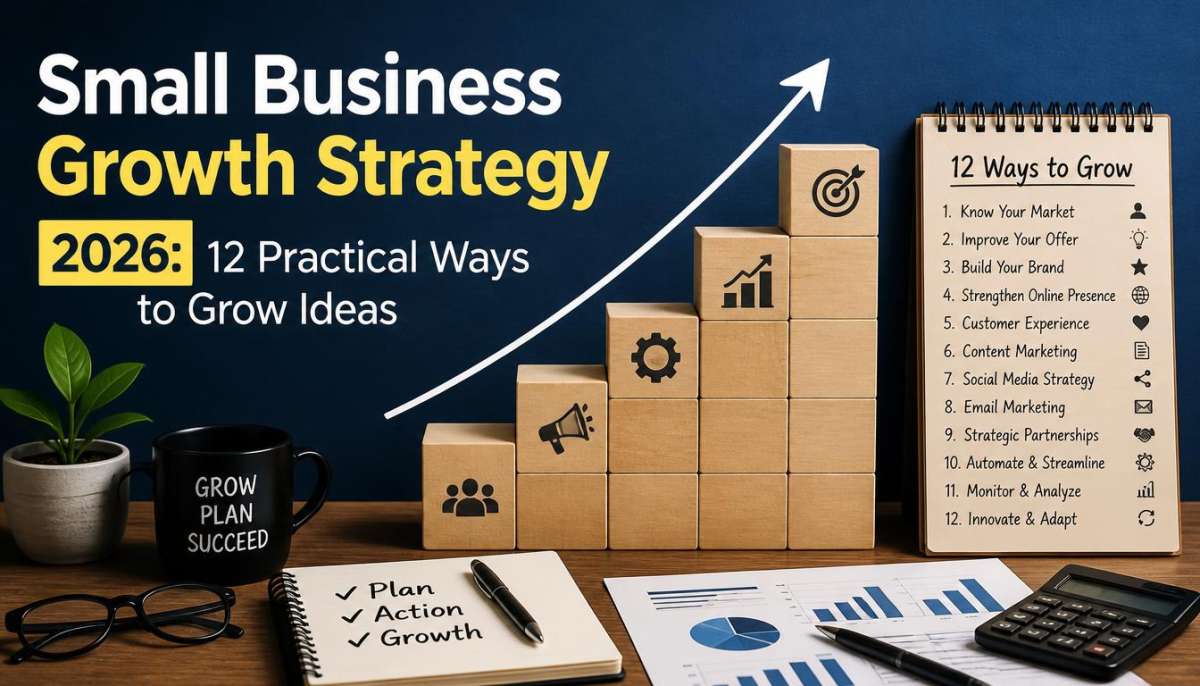
Small Business Growth Strategy 2026: 12 Practical Ways to Grow
Growing a small business in 2026 is not just about chasing more sales. Sustainable growth comes from attracting the right customers, protecting cash flow, improving your operations, and using technology to save time.
The right small business growth strategy 2026 will look different for every company. A local service business may need better local marketing, while an online store may benefit more from customer retention and automation.
Instead of trying everything at once, focus on the areas that can create the biggest improvement. Test your ideas, track the results, and put more resources into what works.
What Is a Small Business Growth Strategy?
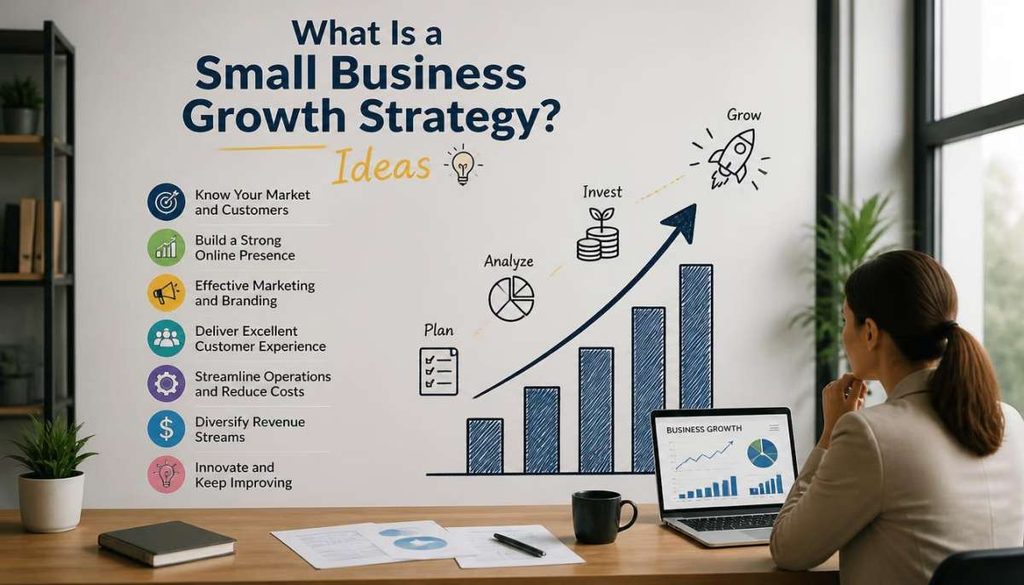
A small business growth strategy is a plan for increasing revenue, customers, market reach, or profitability while keeping the business manageable.
Growth can come from several directions. You can attract new customers, increase repeat purchases, improve your sales process, introduce related products, enter a new market, or reduce the time and cost required to operate the business.
For most small businesses, sustainable growth comes from combining a few of these approaches rather than trying every trend at once.
1. Start With a Clear Growth Goal
Before spending more money on advertising, software, or hiring, decide what you actually want to improve.
“Grow my business” is too broad to guide your decisions. Instead, choose a measurable goal for the next three, six, or twelve months.
Set a Specific Revenue Target
You might want to increase monthly revenue, gain a certain number of recurring customers, improve average order value, or generate more qualified leads.
Choose a target that matches your current capacity. If your business is already struggling to fulfill orders, simply generating more demand could create additional problems.
Track More Than Revenue
Revenue is important, but it doesn’t show the complete picture.
Keep an eye on:
- Profit margin
- New customers
- Customer retention
- Conversion rate
- Average order value
- Customer acquisition cost
- Repeat purchases
- Cash flow
These numbers help you understand whether your business is actually becoming healthier as it grows.
2. Focus on Your Most Valuable Customers
Trying to market to everyone can quickly consume a small business’s budget and time.
Start with the people who already buy from you. Look for patterns in their needs, purchasing behavior, location, budget, and reasons for choosing your business.
Define Your Ideal Customer
Your ideal customer isn’t simply an age group or location.
Think about the problem they are trying to solve, what influences their buying decision, and why they might choose your business instead of a competitor.
This information can make your website, offers, advertisements, and content much more relevant.
Improve Customer Retention
Getting a new customer is only one part of growth.
Existing customers can create repeat purchases, referrals, reviews, and long-term revenue. Simple follow-ups, useful recommendations, loyalty offers, and better customer service can give people more reasons to return.
3. Strengthen Your Core Offer
You don’t always need to launch something completely new to grow.
Sometimes the biggest opportunity is improving the product or service that already performs well.
Look at your current sales and identify your strongest offers. Then consider whether you can make them easier to understand, easier to buy, or more valuable.
Make Your Value Proposition Clear
A potential customer should quickly understand:
- What you sell
- Who it is for
- What problem it solves
- Why your business is different
- What they should do next
If customers need to search through several pages to understand your offer, simplify the message.
Create Better Packages
Consider bundles, subscriptions, service packages, or complementary offers.
For example, a consultant could combine several individual services into a monthly package. A cleaning company might offer recurring appointments instead of relying entirely on one-time bookings.
The goal is to make the buying decision easier while increasing the value of each customer relationship.
4. Improve Cash Flow Before You Scale
Increasing sales doesn’t automatically mean your business is financially healthier.
You can have strong revenue while still struggling to pay suppliers, employees, software bills, taxes, or other expenses on time.
That’s why cash-flow management should be part of your growth strategy.
Track Money Coming In and Going Out
Review your regular expenses and identify areas where money is being spent without producing enough value.
Look for unused subscriptions, inefficient processes, unnecessary inventory, expensive tools, or marketing channels that consistently produce weak results.
Cost control doesn’t mean cutting everything. Protect spending that supports customers, sales, technology, and essential operations.
Build a Cash Buffer
If your business allows it, keep some working capital available for slower periods and unexpected expenses.
Having a financial cushion gives you more flexibility when opportunities or problems appear.
5. Use AI to Automate Repetitive Work
AI is one of the major technology opportunities for small businesses in 2026, but you don’t need to automate everything.
Start with repetitive tasks that take time but don’t require constant human judgment.
Also Read : How to Set B2B SaaS Marketing Goals That Actually Drive Revenue
Use AI for Content and Research
AI can assist with:
- Brainstorming content ideas
- Creating first drafts
- Organizing research
- Summarizing information
- Creating marketing variations
- Building templates
- Analyzing customer feedback
Human review is still important, especially for information published under your business name.
Automate Follow-Ups and Routine Tasks
Automation can handle appointment reminders, simple email sequences, lead follow-ups, customer notifications, and other repetitive workflows.
The goal is not to remove the human element. It’s to reduce unnecessary manual work so you can spend more time on customers and important decisions.
6. Build a Simple Sales System
Growth becomes difficult when every lead is handled differently.
Create a repeatable process that explains what happens from the first inquiry through the sale and follow-up.
Create a Sales Process
A simple process could look like this:
- A new lead arrives
- The lead is qualified
- Relevant information is provided
- Follow-up is scheduled
- Questions are answered
- The customer makes a decision
- Post-sale communication begins
A CRM can help you organize customer information and make sure potential customers don’t get forgotten.
Follow Up Consistently
Many customers don’t purchase immediately.
A consistent follow-up system keeps your business visible without overwhelming people with unnecessary messages.
The timing should depend on the customer’s actions and where they are in the buying process.
7. Choose the Right Marketing Channels
Small businesses rarely have unlimited marketing budgets.
Instead of trying to maintain every social platform, choose one or two channels that match your customers.
Consider Local SEO
For local businesses, search visibility can help potential customers discover your products or services when they’re actively looking for them.
Keep your website and business information accurate, create useful local content, and make it easy for customers to contact you.
Build an Email List
Social media can help you reach new people, but you don’t control the platform’s algorithm.
An email list gives you a direct communication channel with people who have already shown interest in your business.
Use it for useful content, product updates, reminders, promotions, and relevant recommendations.
8. Turn Existing Customers Into Repeat Buyers
One of the easiest growth opportunities can be sitting inside your existing customer base.
Instead of always asking how to find more customers, ask what would make your current customers want to buy again.
Use Upselling and Cross-Selling Carefully
Recommend products or services that naturally complement what someone has already purchased.
For example, a customer buying a laptop may need accessories. Someone hiring a web designer may also need ongoing website maintenance.
The recommendation should solve a real need rather than simply increase the customer’s bill.
Encourage Reviews and Referrals
Satisfied customers can also introduce your business to new people.
Make it easy for customers to leave honest reviews and refer people who could genuinely benefit from your product or service.
9. Create Additional Revenue Streams
Once your core business is stable, look for related opportunities that use your existing skills, customers, or infrastructure.
You don’t necessarily need to build an entirely different business.
Add Complementary Products or Services
Think about what your customers need before, during, or after purchasing from you.
A photographer could offer photo albums or editing packages. A fitness professional could add online sessions or personalized plans.
The best additional offers usually have a natural connection to your existing business.
Explore New Customer Segments
You may also discover another audience with a similar problem.
Test the idea before making a major investment. A small campaign can help you determine whether that audience actually responds to your offer.
10. Build Strategic Partnerships
You don’t have to grow entirely on your own.
A partnership with a complementary, non-competing business can introduce your company to a relevant audience.
For example, a wedding photographer could partner with a wedding planner or venue. A web designer could collaborate with a copywriter or branding specialist.
A useful partnership should create value for both businesses and their customers.
11. Build Systems Before You Scale
If your business depends on you remembering every task, answering every question, and fixing every problem, growth can quickly become overwhelming.
Document the processes that happen repeatedly.
Create Simple SOPs
A standard operating procedure doesn’t need to be complicated.
It can simply explain:
- What needs to be done
- The order of the steps
- Which tools are used
- Who handles the task
- What to do when something goes wrong
These systems make delegation easier and help maintain consistency as the business grows.
Don’t Automate a Broken Process
Automation should come after you understand the workflow.
If a process is confusing when done manually, automation can simply make the confusion happen faster.
Simplify the process first, then automate the repetitive parts.
12. Measure, Test, and Improve
A growth strategy isn’t something you create once and never change.
Review your results regularly and identify which activities are actually producing value.
Test Small Changes
Instead of putting a large budget behind an untested idea, start with a smaller experiment.
You could test:
- A new landing page
- A different offer
- A new email sequence
- A local advertising campaign
- A new pricing package
- A referral program
- An automation workflow
Measure the result before deciding whether to invest more.
Track the Metrics That Matter
Don’t overwhelm yourself with dozens of dashboards.
Choose a small group of metrics connected directly to your goals. Revenue, profit, conversion rate, retention, acquisition cost, and cash flow can provide a useful starting point.
Small Business Growth Strategy: What to Focus On in 20
Not every strategy deserves your attention at the same time. Use this table to identify where your business needs improvement first, then focus on one or two areas before adding more initiatives.
| Growth Area | What to Focus On | Practical 2026 Action | What to Measure |
| Cash Flow | Use money efficiently | Reduce unnecessary costs and monitor cash in and out | Cash flow, profit margin |
| Customer Retention | Get more value from existing customers | Improve follow-ups, loyalty offers, and recommendations | Repeat purchases, retention |
| AI & Automation | Reduce repetitive work | Automate routine content, follow-ups, research, and tasks | Time saved, task completion |
| Sales System | Make lead handling consistent | Create a simple CRM and follow-up process | Leads, conversion rate |
| Focused Marketing | Avoid spreading resources too thin | Choose 1–2 channels that fit your audience | Leads, conversions |
| Revenue Diversification | Reduce dependence on one offer | Add complementary products or services | Revenue by offer |
| Partnerships | Reach relevant new audiences | Work with complementary businesses | Referrals, new customers |
| Business Systems | Make growth easier to manage | Document repetitive workflows and create SOPs | Time per task, errors |
| Continuous Improvement | Invest in what works | Test small changes and review results regularly | ROI, conversion, profit |
A Simple 90-Day Small Business Growth Plan for 2026
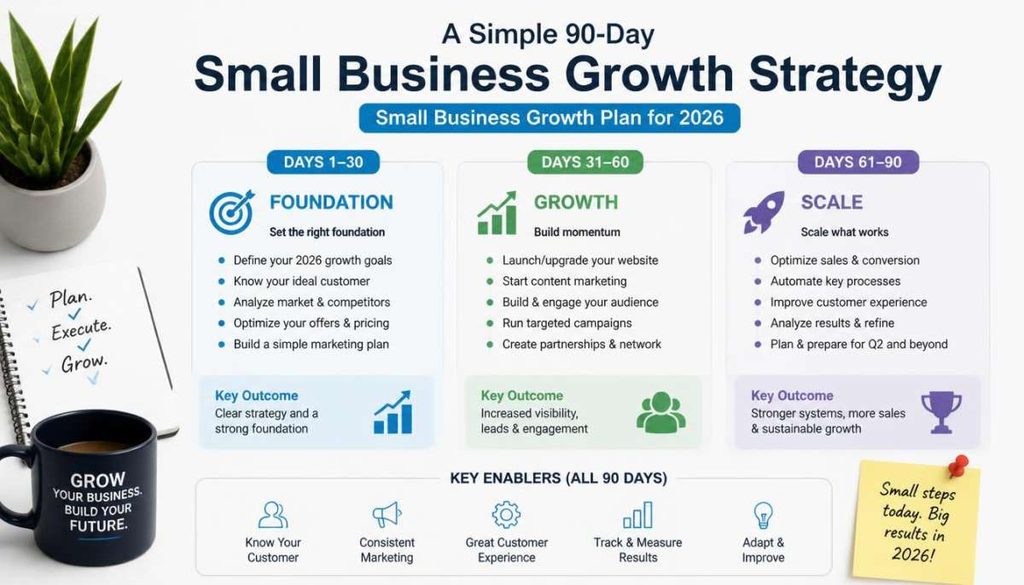
If you’re unsure where to start, divide your growth work into three stages.
Days 1–30: Fix the Foundation
Review your expenses, cash flow, customers, best-selling offers, current marketing channels, and sales process.
Identify the biggest bottleneck instead of trying to fix everything at once.
Days 31–60: Improve Sales and Marketing
Choose your primary marketing channel, improve your offer, strengthen customer follow-ups, and test one or two marketing ideas.
Keep track of the results so you know which changes are producing useful leads or sales.
Days 61–90: Automate and Scale
Document repetitive workflows, automate simple tasks, test a partnership, and review your business metrics.
At the end of 90 days, decide which activities deserve more investment and which should be changed or stopped.
Common Small Business Growth Mistakes to Avoid
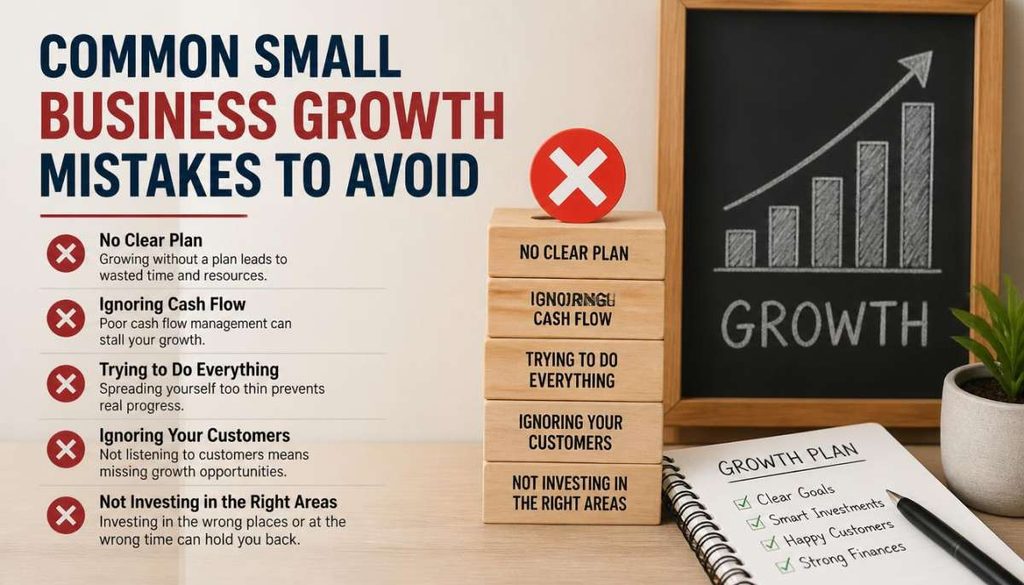
Growth can become expensive when the foundation isn’t ready.
Avoid trying to expand into several markets at once, hiring before understanding your workload, buying too many software tools, and spending heavily on advertising without tracking conversions.
Don’t assume that every new AI tool will improve your business either. A tool is useful only when it solves a real problem or saves meaningful time.
Most importantly, don’t confuse higher revenue with healthier growth. If sales increase while margins, customer satisfaction, cash flow, or operations get worse, the business may simply be getting busier rather than stronger.
How to Know When Your Business Is Ready to Scale
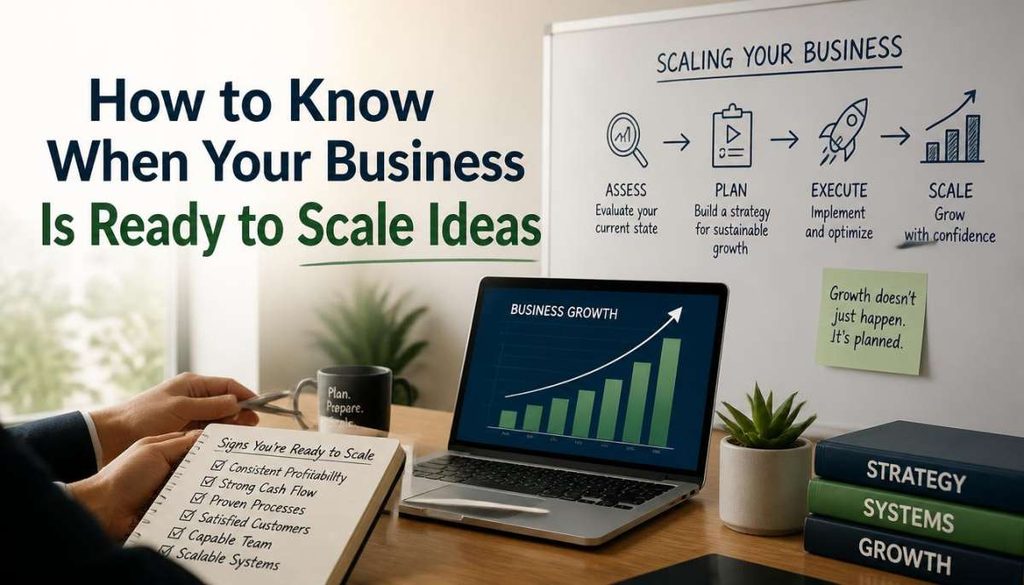
Scaling makes more sense when your business already has some repeatability.
You should have a reasonably clear offer, a defined target customer, a sales process you understand, and enough operational capacity to handle additional demand.
If every new customer creates another problem, fix that problem before aggressively increasing customer acquisition.
Growth should make the business more capable over time, not permanently dependent on longer working hours.
Frequently Asked Questions
What is the best small business growth strategy for 2026?
There isn’t one strategy that works for every business. Start with a clear goal, understand your best customers, strengthen your core offer, protect cash flow, and then use focused marketing, automation, and measurement.
How can a small business grow without spending a lot?
Focus on existing customers, referrals, organic search, email marketing, partnerships, better follow-up, and process improvements. Test new ideas on a small scale before committing a large budget.
How can AI help a small business grow?
AI can assist with content creation, research, data analysis, customer service, scheduling, and repetitive administrative tasks. Start with one practical use case and measure whether it actually saves time or improves results.
Should a small business focus on new customers or existing customers?
Both can contribute to growth, but existing customers should not be overlooked. Repeat purchases, referrals, reviews, and relevant cross-selling can create additional revenue from people who already know your business.
When should a small business expand?
Consider expansion when your current offer is working, demand is reasonably consistent, your finances can support the move, and your systems can handle additional customers.
Build Growth Around What Your Business Can Sustain
A successful small business growth strategy 2026 doesn’t mean doing more of everything.
Start with the fundamentals: understand your customers, protect cash flow, strengthen your offer, create a repeatable sales process, and focus your marketing. Then use AI, automation, partnerships, and better systems to remove unnecessary work and create room for growth.
The goal is steady improvement, not constant expansion. Test your ideas, measure the results, and reinvest in the areas that genuinely help your business become more profitable, efficient, and sustainable.