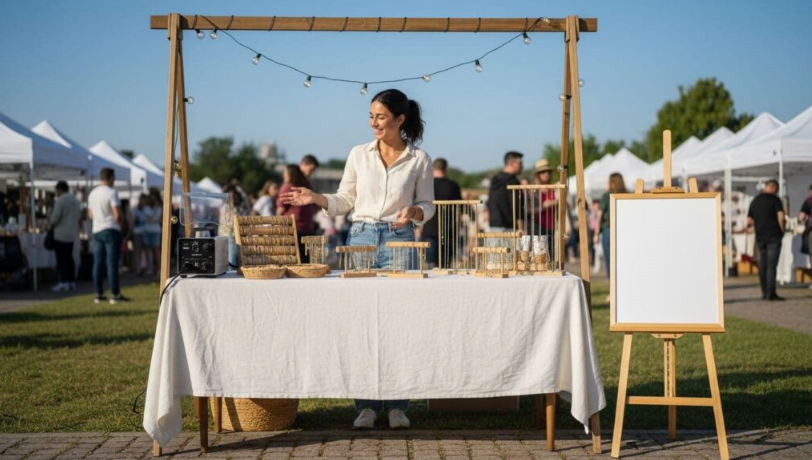
How to Start a Permanent Jewelry Business: The Complete Guide for 2026
The permanent jewelry industry exploded over 300% in searches since 2021 — and it shows no signs of slowing down. In 2026, women are no longer just buying jewelry. They are buying a memory, a bond, and a moment they want to keep forever on their wrist.
The best part? Most successful permanent jewelry business owners started with under $2,000, zero prior experience, and a single pop-up table. No storefront. No big team. Just a welder, a chain, and a clear plan.
If you have been thinking about starting a permanent jewelry business, this guide walks you through every single step — from your very first market research move to booking out private bridal events.
How One Woman Built a $10,000/Month Business From a $1,500 Kit
Sarah had no jewelry experience, no storefront, and no business background. In early 2023 she spent $1,500 on a starter welder kit and booked her first table at a local farmers market.
Her first weekend she made $400. Not life-changing — but enough proof to keep going.
By month three she was posting welding videos on TikTok that were getting thousands of views. Bridal inquiries started coming in through Instagram DMs. She created a simple three-tier service menu — sterling silver, gold-filled, and a premium solid gold option.
By month six she was booking private bridal parties at $800 to $1,200 per event. No lease. No employees. Just a portable station, a strong brand, and a clear process.
Today Sarah runs four pop-up events per month alongside weekly salon residencies and pulls in over $10,000 gross per month.
Her advice to beginners:
Start with one metal, one venue, and one clear audience. Prove it works small before you grow it big.”
Start with market research so you know who will buy and where you fit
Before you buy a pulse arc welder for jewelry, confirm that local demand is real. The strongest buyers are often women ages 18 to 35, brides, boutique shoppers, and event clients who want dainty jewelry they can wear every day.
Review at least five local competitors on Google, Instagram, and TikTok. Track their metals, pricing, event focus, and brand style. A crowded market can still work if your offer feels different, your content is stronger, or your venue strategy is smarter.
Find your best customer before you build your offer
Pick one clear audience first. That could be bridal parties, salon clients, college-age shoppers, or local gift buyers.
Then match your service menu, pricing, and visual style to that group. A bridal package should feel polished and premium. A college pop-up can be lighter, faster, and more price-aware.
Study local competitors and look for service gaps
Track bracelet pricing, charm add-ons, event minimums, booking flow, and content quality. Also note whether they focus on studio visits, private parties, or a pop-up shop business model.
Use that research to shape a better offer. Don’t build a copycat zap jewelry business.
Set up the business the right way before you take your first booking
Start with the basics in a clean order: name the business, choose a legal structure, get an EIN, open a business bank account, and check state and local rules. If you’re starting lean, a small business funding without VC dilution mindset helps you test demand before spending heavily.
Many owners compare a sole proprietorship vs LLC. A sole proprietorship is cheaper and simpler. An LLC for small business owners costs more, but it can add liability protection.
Choose your business structure, tax setup, and licenses
An EIN is free from the IRS. Most owners also need sales tax for jewelry, plus a city or county business license.
Check local rules for event-based services and jewelry welding. Some cities may have added fire or vendor requirements.
Get insurance before working with the public
Jewelry business insurance matters from day one. General liability coverage protects you at salons, markets, and private events.
Many venues won’t book you without proof of insurance.
Buy the right equipment and supplies without overspending
Your core gear includes a jewelry welding kit, safety shield, glasses, pliers, cutters, measuring tape, jump rings, chain, display items, and packaging. A basic welder setup often starts around $1,000 to $5,000, while a fuller launch can reach $10,000.
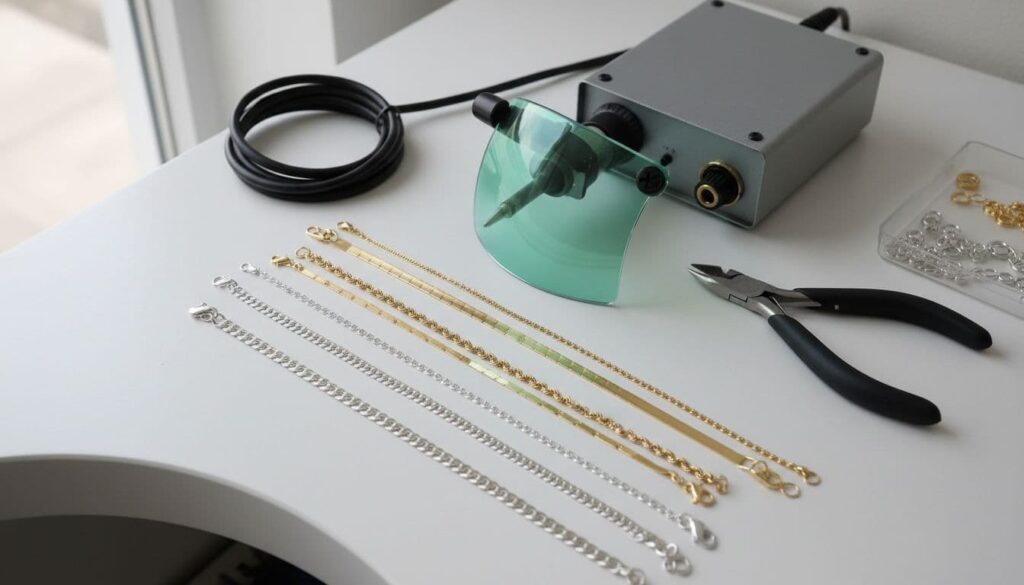
Buy light at first. Test a few chain styles, especially gold-filled chain and sterling silver chain, because they are strong starter metals for a permanent bracelet business.
Your must-have permanent jewelry tools
You need a welder, hand tools, safety gear, and a portable jewelry station. Display pieces and packaging matter too, because customers buy with their eyes first.
Many starter kits include training, which can shorten the learning curve.
How to choose chain, metals, and suppliers
Look for durability, clean solder points, and fast reorders. Gold-filled works well for premium daily wear. Sterling silver offers a lower entry price.
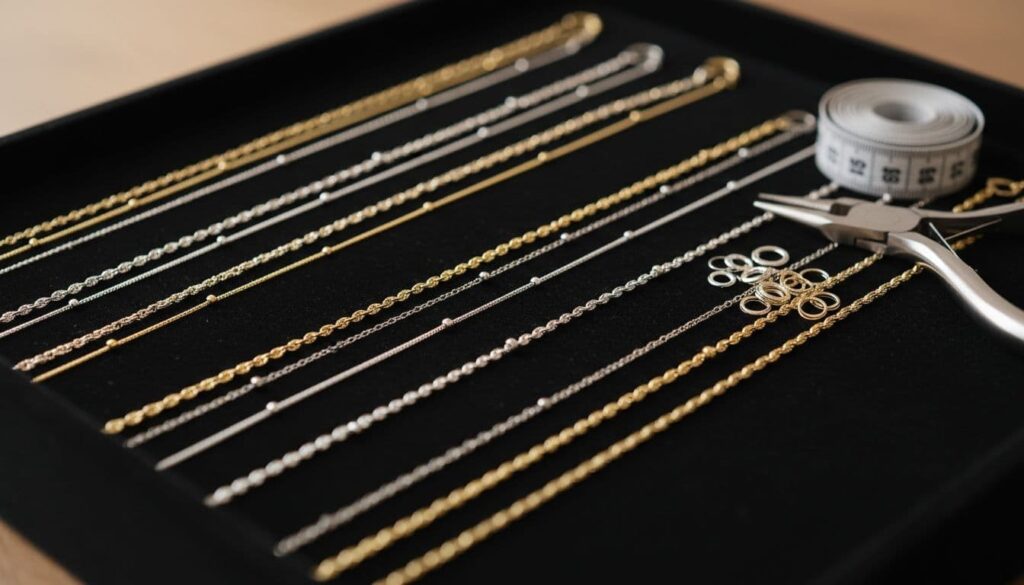
Start with small test orders from permanent jewelry supplies wholesale vendors. Good photos and reliable restocks matter more than a huge catalog.
Build a pricing plan that covers costs and leaves room for profit
Use a simple formula: materials + labor + equipment wear + overhead, then add profit. In many markets, bracelets land around $100 to $200. Anklets often run $120 to $250, depending on metal and audience.
This quick menu keeps buying simple:
| Tier | Common metal | Typical price |
| Entry | Sterling silver | $90 to $130 |
| Core | Gold-filled | $120 to $200 |
| Premium | Solid gold or custom | $220+ |
Add charms, connectors, and group packages to raise average order value.
Use service tiers to make buying easy
A clear jewelry service menu reduces confusion. Offer sterling silver, gold-filled, and premium options.
That structure works well for an infinity jewelry business because buyers can upgrade without feeling pushed.
Know your margins before you book events
Don’t copy low prices from Instagram. Travel, booth fees, packaging, card fees, and taxes all cut into profit.
A break-even point calculator can help you see how many bracelets you need to sell at each event.
Choose a business model that matches your budget and local demand
Many new owners start with a mobile beauty business model because it keeps overhead low. Pop-ups, salon partnerships, farmers markets, and private parties let you test demand before signing a lease.
A home studio can work if local rules allow it. Still, pop-ups and events often validate demand faster.
Compare home studio, pop-up, salon, and event setups
A home studio offers control. Pop-ups bring visibility. Salon suite jewelry services can bring steady foot traffic. Private events often have the highest ticket totals.
Start where rent is low and feedback is fast.
Ask venues the right questions before you say yes
Check foot traffic, table space, lighting, outlet access, event fees, and insurance rules. Also ask whether the audience matches your target buyer.
A busy venue is only useful if the right people walk in.
Create a brand and marketing plan that helps people remember you
Your brand should look clean, simple, and consistent. Pick a clear name, a strong logo, and a visual style that fits dainty jewelry lovers, Gen Z jewelry trends, or millennial jewelry shoppers, depending on your niche.
Short-form video drives demand because permanent jewelry welding looks memorable on camera.
Use social content to turn the welding moment into demand
Post welding clips, close-up chain shots, event setups, and stacked bracelet stories. Client reaction videos also work well for Instagram marketing for jewelry and TikTok for small business.
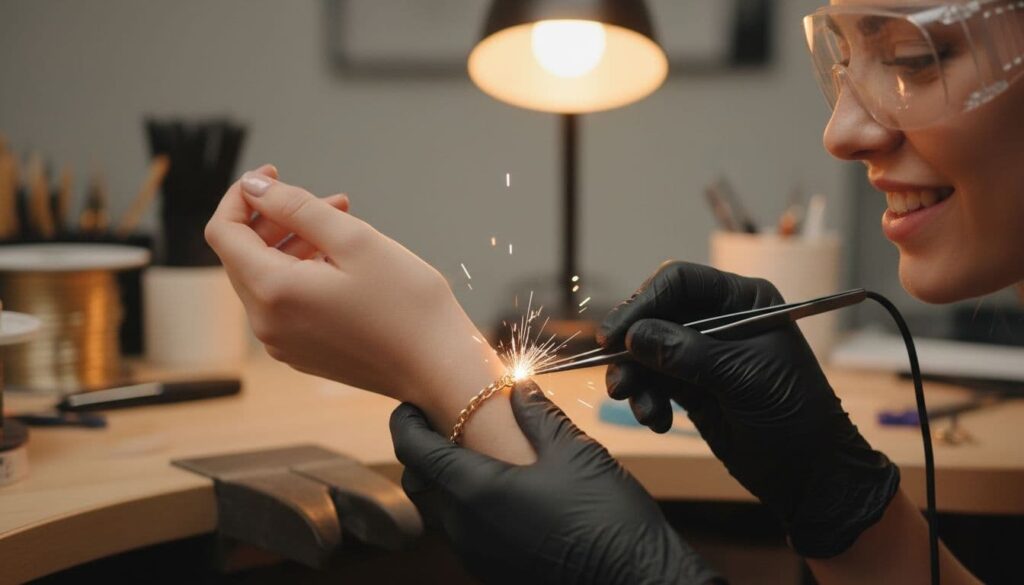
Use local tags, venue tags, and customer reposts to widen reach.
Set up local SEO so nearby customers can find you
Build your Google Business Profile setup early. Add city-based keywords, clear service pages, reviews, and direct contact details.
Local SEO for jewelry shops matters because most bookings come from nearby shoppers and event planners.
Make booking and payment easy so the customer experience feels smooth
Fast systems reduce no-shows. Use online booking, simple intake forms, event deposits, and clear calendar rules.
Choose tools for appointments, deposits, and reminders
Your flow should move from inquiry to deposit to reminder. Deposits protect event dates and reduce cancellations.
Set up payments, receipts, and basic bookkeeping from day one
Use card readers and mobile POS tools such as Square or Stripe for jewelry payments. Also learn to choose the right merchant category before you process volume.
Keep business and personal spending separate. That habit makes bookkeeping for small business owners much easier.
Scale carefully once your first offers and events are working
Once demand is steady, grow through bridal party jewelry packages, boutique collaboration, salon residencies, and stacking promotions. Repeat buyers often bring the best margins.
Grow revenue with packages, repeat visits, and partnerships
Bridesmaid gifts, matching jewelry for friends, and bachelorette party jewelry activity packages can lift sales without heavy ad spend.
Add staff or expand locations only after your systems are solid
Document training, pricing, and quality rules first. Then study the growth stages and common pitfalls before hiring or opening another location.
Common mistakes, beginner FAQs, and the next step to take
Most new owners can learn the basics within days or weeks, especially with hands-on training. Certification is not always required, but local rules still matter. Gold-filled and sterling silver are the safest starting metals for most beginners.
The biggest cash drains are easy to spot. New owners often buy too much stock, skip insurance, underprice services, sign a lease too early, or accept poor-fit events.
Answers to the questions most new permanent jewelry owners ask
Yes, you can learn without prior jewelry experience. Yes, a home-based or mobile model can work well. Profit speed depends on demand, pricing, and costs.
Mistakes that can drain cash before the business takes off
Weak competitor research and loose pricing cause damage fast. So does saying yes to every market, even when the crowd doesn’t match your buyer.
A strong business plan for jewelry starts with local proof, not wishful traffic.
Starting a permanent jewelry business works best when you keep it simple. Research local demand, start lean, set up the business correctly, and price for real profit.
The smartest next move is practical: build one starter menu, price each tier with clear margins, and book one test pop-up or private event. That first small proof often tells you more than months of planning.