
How to Manage Cash Flow in a Small Business
Managing cash flow in a small business starts with knowing how much money is available, when payments will arrive, and which expenses are coming due. Strong sales alone do not guarantee that a business has enough cash to pay employees, purchase inventory, cover rent, or handle unexpected costs.
A business can make a profit on paper and still struggle to pay its bills. This often happens when customers pay late, too much money is tied up in inventory, or expenses arrive before sales revenue reaches the bank account.
The good news is that you do not need a complicated financial system to get better control of your money. A consistent routine for tracking income, planning expenses, and reviewing upcoming payments can help you spot cash shortages before they become serious problems.
What Is Cash Flow Management?
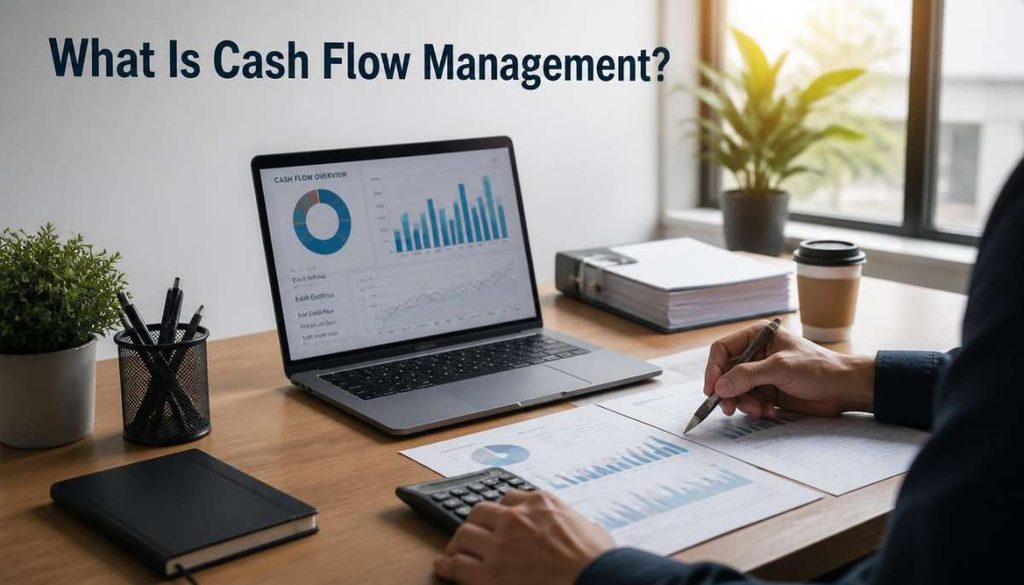
Cash flow management is the process of tracking the money entering and leaving your business. It helps you understand whether you have enough available cash to cover everyday expenses and meet upcoming financial obligations.
Cash inflows may include customer payments, sales revenue, business loans, and other money received. Cash outflows include rent, payroll, supplier payments, inventory purchases, taxes, insurance, and loan repayments.
The timing of these transactions matters just as much as the amounts involved.
For example, imagine a small marketing agency completes a $6,000 project in October. The agency records the sale, but its customer has 30 days to pay the invoice. Meanwhile, the agency must pay $2,000 in salaries and $800 in software and operating expenses this month.
Although the agency has earned revenue, it may not have enough cash available to cover its immediate bills. The problem is the gap between earning the money and receiving it.
Good cash flow management helps business owners understand these gaps and prepare for them.
1. Track Every Dollar Coming In and Going Out
The first step is to maintain an accurate record of your business transactions. Without reliable numbers, it is difficult to know whether your business has enough cash to operate comfortably.
Record customer payments, sales receipts, supplier bills, payroll, rent, subscriptions, taxes, and other regular expenses. Keep business transactions separate from personal spending so you can see how the company is actually performing.
You can use a spreadsheet, bookkeeping software, or a dedicated accounting system. The best option is one that fits your business size and that you can update consistently.
Your records should help you answer these questions:
- How much cash is currently available?
- How much money do customers still owe?
- Which bills must be paid soon?
- What expenses are increasing?
- How much cash is expected to remain after upcoming payments?
Review your records weekly rather than waiting until the end of the month. Frequent reviews make it easier to notice unusual spending, unpaid invoices, or changes in your available balance.
2. Create a Cash Flow Forecast
A cash flow forecast estimates how much money will enter and leave your business over a future period. It helps you identify possible shortages while you still have time to respond.
Start with the cash currently available in your business bank account. Add the customer payments you reasonably expect to receive and subtract the expenses you expect to pay.
For a simple forecast, include:
- Your opening cash balance
- Expected customer payments
- Cash sales and other likely receipts
- Rent, salaries, utilities, and supplier bills
- Taxes, loan repayments, and insurance
- Planned purchases and unexpected expenses
Use realistic payment dates rather than assuming every customer will pay on time. If a customer regularly pays invoices two weeks late, account for that pattern in your forecast.
A weekly forecast covering the next 8 to 13 weeks can be useful for a small business with changing income or expenses. You can also prepare a monthly forecast for longer term planning.
Update the forecast as actual payments arrive and new bills appear. It does not need to predict every transaction perfectly. Its purpose is to show when your cash balance could become uncomfortably low.
Also Read : Business Website Classification Criteria: Types, Purpose & 2026 Checklist
3. Get Customer Payments Faster
Late customer payments are a common reason businesses experience cash flow pressure. You may have completed the work and sent the invoice, but until the customer pays, that money is not available to cover your expenses.
Make payment expectations clear before starting a project or delivering an order. Your invoices should include the amount due, the payment deadline, accepted payment methods, and instructions for paying.
Send invoices promptly instead of allowing completed work to sit unbilled. For larger projects, consider whether an upfront deposit or payments at agreed milestones would be appropriate.
You can also improve collections by:
- Sending polite reminders before and after the due date.
- Making payment instructions simple and easy to follow.
- Checking in quickly when a payment becomes overdue.
- Reviewing which customers regularly pay late.
- Agreeing on suitable payment terms before accepting new work.
For example, a freelance designer who charges $3,000 for a project might request a deposit before beginning work and the remaining balance at an agreed milestone. This can reduce the amount of unpaid work the designer must finance personally.
The right arrangement depends on your industry, customer relationships, and contract terms. The goal is to reduce unnecessary delays without damaging valuable business relationships.
4. Control Expenses Without Hurting Operations
Reducing expenses can help protect cash flow, but cutting every cost is rarely a good strategy. Some spending is essential to maintaining product quality, serving customers, and generating future revenue.
Start by reviewing recurring payments, supplier costs, software subscriptions, insurance, utilities, and other operating expenses. Look for services you no longer use, purchases that could be delayed, and contracts that may be renegotiated.
Separate essential expenses from those that are optional or can wait.
For example, a small online store may need to pay for inventory that sells consistently. However, purchasing large quantities of a slow selling product could leave cash tied up for months.
Review past spending alongside actual sales results before making decisions. A cost that appears expensive may still be worthwhile if it reliably generates revenue or prevents a larger operational problem.
Avoid delaying important tax payments, ignoring contractual obligations, or cutting essential services simply to make the current balance look healthier. Those decisions can create more expensive problems later.
5. Manage Inventory and Supplier Payments Carefully
Inventory can absorb a significant amount of cash, especially for retailers, wholesalers, and product based businesses. Money spent on stock is not immediately available for rent, payroll, or other expenses. It returns to the business when the products sell and customers pay.
Review sales history before placing new orders. Identify which products sell quickly, which remain on shelves, and which are approaching the end of their useful selling period.
Ordering smaller quantities more frequently may help some businesses preserve cash, although shipping costs, supplier pricing, and stock availability also matter. The right approach balances inventory costs against the risk of running out of popular products.
Supplier payment terms deserve similar attention.
If a supplier offers payment within 30 days, understand exactly when that period starts and when payment is due. Compare that date with the time you expect to receive money from your own customers.
You may be able to negotiate terms that better match your sales cycle. However, do not assume a supplier will extend a deadline without an agreement.
The aim is to avoid paying for stock too early when a reasonable alternative is available, while maintaining dependable supplier relationships.
6. Build a Cash Reserve for Unexpected Costs
Even a well managed business can face unexpected expenses. Equipment may break, a major customer may delay payment, or sales may decline during a slow season.
A cash reserve gives you a source of funds for these situations without forcing you to rely immediately on emergency borrowing.
Start by identifying your essential monthly operating expenses. These may include rent, payroll, utilities, insurance, necessary inventory, and contractual payments.
Then set a realistic savings target based on your business’s stability and risks. A reserve covering three to six months of essential expenses is a common long term goal, but a newer business may need to build toward it gradually.
For example, if your essential expenses are $8,000 per month, a three month reserve would be $24,000. You do not need to save that amount immediately. You can transfer a manageable amount into a separate business reserve whenever cash flow allows.
Keep the reserve accessible enough to cover genuine business needs. Avoid treating it as money available for routine spending or expansion projects that could be postponed.
7. Separate Business Money From Personal Money
Mixing personal and business transactions makes cash flow harder to understand. It can also complicate bookkeeping, financial reporting, and tax preparation.
Use a dedicated business bank account for business income and expenses. Record owner contributions, withdrawals, and payments to yourself accurately.
If you operate as a sole proprietor, establish a clear process for taking money out of the business. If you run a company with employees or co owners, follow the appropriate payroll, compensation, and distribution procedures for your business structure.
Avoid withdrawing money simply because the bank balance looks high. Some of that cash may already be needed for upcoming supplier bills, payroll, taxes, or loan payments.
Separating your finances helps you see what the business can genuinely afford and prevents personal spending from hiding an operating cash shortage.
8. Know the Difference Between Profit and Cash Flow
Profit and cash flow are related, but they measure different things.
Profit generally reflects revenue earned minus expenses incurred over an accounting period. Cash flow measures the actual movement of money into and out of the business during that period.
The timing of payments can make the two figures look very different.
Consider a small consulting business that earns $10,000 in revenue during a month and records $7,000 in expenses. Its profit before any other applicable costs or adjustments is $3,000.
However, suppose customers have paid only $4,000 of the revenue so far, while the business has already paid $6,000 in expenses. Its cash position has declined by $2,000 from those transactions, even though the business has recorded a profit.
The unpaid customer balances may arrive later, but the business still needs enough cash to cover current obligations.
This is why business owners should review both profitability and cash flow. Profit helps show whether the business model is financially viable. Cash flow helps show whether the business can meet its payments when they are due.
9. Review Your Cash Flow Every Week
Cash flow management works best when it becomes part of your regular business routine rather than a task you perform only during a crisis.
Choose a consistent day each week to review your bank balance, expected receipts, outstanding invoices, upcoming bills, and cash flow forecast.
Compare the forecast with what actually happened. If customer payments arrived later than expected or expenses were higher than planned, update your projections.
Look for patterns that may require action. For example, your business might regularly experience a cash shortage before a busy sales period because inventory must be purchased weeks in advance. Recognizing this pattern gives you time to adjust purchasing schedules or build reserves.
A simple weekly review can follow this checklist:
- Confirm the available business cash balance.
- Review overdue customer invoices.
- List payments expected over the next few weeks.
- Check upcoming supplier bills, payroll, taxes, and loan payments.
- Update your cash flow forecast.
- Identify any expected shortage and decide what action is appropriate.
If your business has seasonal income, perform additional reviews before the slower months begin. Planning ahead is usually easier than trying to find money after a shortage has already occurred.
What Should You Do When Your Small Business Has a Cash Flow Problem?

If your business is already short on cash, start by identifying the timing and size of the shortfall. Determine which customer payments are overdue, which expenses are due soon, and how much cash is genuinely available.
Contact customers about overdue invoices and review whether nonessential purchases can be postponed. Speak with suppliers early if you need to discuss alternative payment arrangements. Review your forecast to determine whether the problem is temporary or part of a recurring pattern.
If the shortage is larger than your business can reasonably resolve through collections and spending adjustments, consider speaking with an accountant or qualified financial adviser about your options.
Business credit or short term financing may help in some circumstances, but borrowing creates repayment obligations and costs. Before accepting financing, assess the interest, fees, repayment schedule, and whether your expected future cash flow can support the payments.
If your business repeatedly struggles to cover ordinary expenses, investigate the underlying cause. The problem may involve low profit margins, slow customer payments, excess inventory, high fixed costs, or a mismatch between the time you pay suppliers and the time customers pay you.
Finding the cause is more useful than repeatedly covering the same shortage without changing the conditions that created it.
Frequently Asked Questions
How can I manage cash flow in a small business?
Track income and expenses regularly, forecast upcoming payments, send invoices promptly, follow up on overdue balances, manage inventory carefully, and build a cash reserve. Review your cash position every week so you can identify potential shortages early.
How often should a small business review cash flow?
Weekly reviews are a useful starting point for many small businesses. Businesses with daily cash transactions, tight margins, seasonal sales, or frequent payment delays may need to monitor their balances more often.
Why does my business have sales but no cash?
Your customers may not have paid their invoices yet, your business may have spent cash on inventory, or expenses may be due before revenue arrives. High sales do not automatically mean that enough money is available in your bank account.
How much cash should a small business keep in reserve?
A common long term target is three to six months of essential operating expenses. The appropriate amount depends on the stability of your revenue, seasonal patterns, fixed costs, and access to other reliable funding sources.
What is the difference between cash flow and working capital?
Cash flow describes money moving into and out of a business over time. Working capital generally measures current assets minus current liabilities and helps indicate the resources available to meet short term obligations. Both are useful when assessing a business’s financial position.
Can a small business manage cash flow without accounting software?
Yes. A well organized spreadsheet can track the opening balance, expected receipts, payments, and closing balance for each period. As transaction volume grows, accounting software may make reconciliation, invoicing, and forecasting more efficient.
Final Thoughts
Learning how to manage cash flow in a small business is about understanding when money will be available, not just how much revenue the business earns. Accurate records, realistic forecasts, timely customer collections, careful spending, and a reserve for unexpected costs can make daily financial decisions easier.
Start with a simple weekly cash flow review and update your forecast whenever your expectations change. The earlier you recognize a potential shortage, the more options you are likely to have for addressing it.