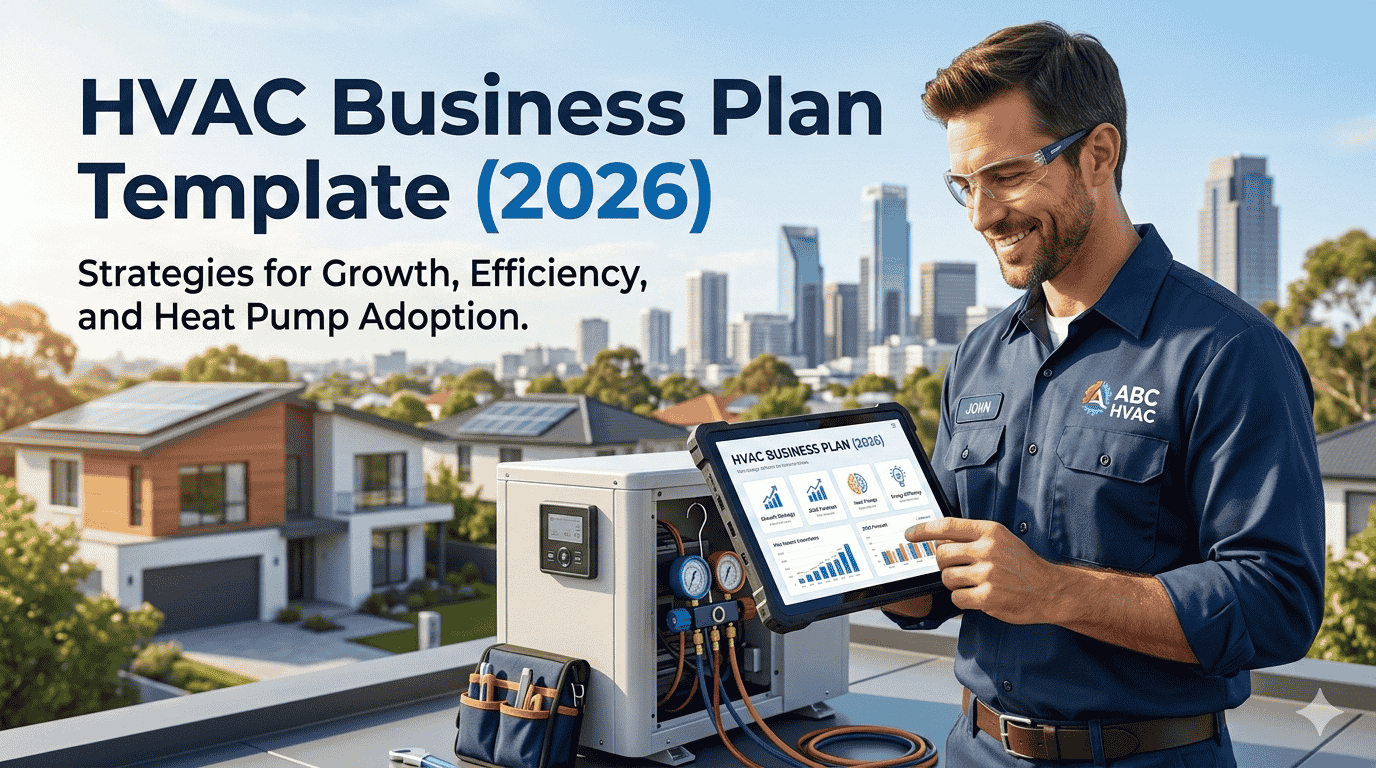
Most HVAC owners are great techs. You can diagnose a bad capacitor in minutes, but put a blank business plan in front of you and it feels like a different trade.
A solid hvac business plan template fixes that. It gives you a simple structure you can copy into a doc, then fill in with your prices, services, and numbers. It also keeps you focused when the phone stops ringing for a week, or when you’re deciding if a second truck is worth it.
Below is a practical template with short examples, plus real startup costs and HVAC financial projections. Use it for a bank loan, investors, truck financing, or just to stay organized.
Why an HVAC business plan matters in 2026 (even for a one-truck startup)
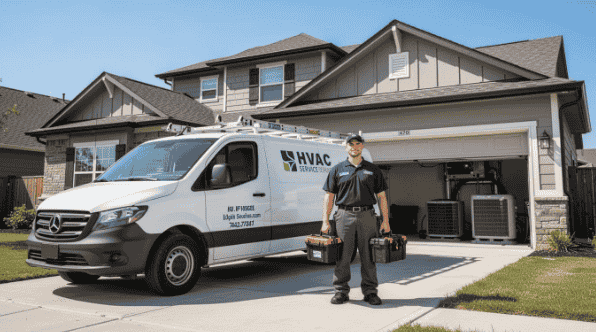
In 2026, an HVAC business plan isn’t “corporate paperwork.” It’s a way to prevent expensive guesses. Equipment costs keep rising, and refrigerant transitions under federal rules are pushing contractors toward new tools, training, and inventory choices. At the same time, demand is strong for heat pumps, smart thermostats, and indoor air quality upgrades, so a clear HVAC business model helps you choose what to sell and how to price it.
A plan also keeps your cash flow honest. Many new owners price like a tech, not like a business. That usually means low labor rates, no overhead recovery, and surprise tax bills. With a basic HVAC cash flow forecast, you’ll see slow months before they happen, and you can adjust marketing or service agreement contracts to stabilize revenue.
Hiring gets easier, too. When you can explain your weekly call volume, your service area, and your training standards, good installers take you seriously. If you want a more detailed growth framework, this guide on how to create an HVAC business plan is helpful as a companion.
Situations where you’ll almost always need a written plan:
- SBA loan or bank line of credit
- Truck financing or wrapping equipment into a lease
- Leasing shop or warehouse space
- Adding a second truck (and payroll)
A business plan doesn’t predict the future. It prevents you from being surprised by the obvious.
How to Start an HVAC Business in 2026 (Quick Checklist)
- Get HVAC licensing and EPA Section 608 certification
- Register LLC or corporation
- Secure liability and commercial auto insurance
- Buy or lease a service van
- Purchase HVAC equipment investment (recovery machine, gauges, vacuum pump)
- Set pricing model and labor rate
- Launch Google Business Profile
- Implement CRM and invoicing software
HVAC business plan template, section by section (with short examples you can copy)

Think of this as a small business plan template tuned for residential and commercial HVAC services. Copy the headings into Google Docs or Word. Keep it tight, one to three pages is fine at first.
1) Company summary (who you are)
Write one paragraph.
Example: “Smith Heating and Cooling is a licensed HVAC contractor serving Columbus, Ohio. We focus on residential service and replacement, with a heat pump retrofit specialty. The owner has 10 years of field experience and EPA certification.”
2) Executive summary (write this last)
This is the part lenders read first, so make it clear. If you want an executive summary example, use this format.
Example: We provide residential HVAC repair, preventive maintenance, and full system replacement across three primary service ZIP codes, focusing on same-day service and energy-efficient upgrades. We target $22,000 in monthly revenue by month 12 through flat-rate repairs, financed replacements, and maintenance memberships. Funding requested: $40,000 for a service van upfit, tools, and 90 days of working capital.”
3) Market and customer (where the money comes from)
Keep it local and specific. List your service area, home types, and buyer needs.
Prompt: “Our ideal customer owns a 1,500 to 3,000 sq ft home built 1990 to 2015 and wants faster repairs, cleaner air, and lower utility bills.”
Add a sentence on competition: “Top competitors compete on price and coupons, we compete on fast scheduling, clear options, and documented installs.”
4) Services (what you sell)
This is your heating and cooling business plan menu. Include three to seven core offers, not everything you can do.
Example services:
- Diagnostic and repair (residential)
- Heat pump installs and retrofits
- Smart thermostat install and setup
- IAQ upgrades (filtration, ventilation add-ons)
- Preventive maintenance plans (service agreement contracts)
5) HVAC service pricing structure (how you charge)
State your model and give a simple sample.
Example: “We use flat-rate pricing for common repairs, time-and-materials only for complex diagnostics. Our target labor rate is $165 per billable hour. We aim for 55% gross margin on service and 35% on replacements.”
For marketing angles that fit how people shop now, this HVAC business plan template focused on strategy has useful ideas on positioning and lead flow.
6) HVAC marketing strategy (how customers find you)
Write four channels, then a weekly cadence.
Example: “Google Business Profile with before and after photos weekly, local SEO pages for heat pump installs, referral program for past customers, and one neighborhood direct-mail test per quarter.”
7) Operations (how the work gets done)
Include hours, dispatch, warranties, and basic SOPs.
Prompt: “We answer calls 7am to 7pm. Same-day service when possible. All installs include a startup checklist, airflow verification, and customer walkthrough.”
8) HVAC licensing and certification requirements (how you stay compliant)
Keep it short and factual.
Example: “Owner holds state HVAC license (or works under a qualifying party), EPA Section 608 certification, and maintains general liability insurance, commercial auto, and workers’ comp as required.”
Startup costs, financial projections, and a break-even example (with numbers)

For a one-truck operation in 2026, a realistic range is often $25,000 to $100,000, with many owners landing near $50,000. Your number depends on whether you already own a van, what HVAC equipment investment you carry, and how much inventory you stock. Replace the sample numbers below with real quotes from vendors.
Here’s a simple startup cost breakdown you can copy.
| Startup cost category | Example cost (USD) | Notes |
| Truck purchase or down payment | 18,000 | Used van plus taxes and fees |
| Vehicle wrap, racks, basic upfit | 3,500 | Keep it functional, not fancy |
| Tools and test instruments | 6,000 | Meters, recovery, vacuum, hand tools |
| Initial parts and supplies | 2,500 | Common motors, capacitors, filters |
| Licensing, insurance, bonds | 4,000 | Varies by state and coverage |
| Software (CRM, invoicing, payments) | 1,200 | Annual estimate |
| Marketing launch (signage, photos, ads) | 2,800 | First 60 to 90 days |
| Working capital (90 days) | 12,000 | Fuel, payroll, rent, slow weeks |
| Estimated total | 50,000 | Mid-range one-truck startup |
Now a basic monthly projection (service-first model):
- Average ticket: $425
- Jobs per week: 18
- Monthly revenue: 18 jobs x $425 x 4.3 weeks = $32,895
- Direct costs (parts, equipment, permits) at 40%: $13,158
- Gross profit: $19,737
- Fixed monthly costs (insurance, software, fuel, phone, rent, ads): $11,500
- Estimated net before owner taxes: $8,237
Break-even math stays simple: Break-even revenue = Fixed costs ÷ Gross margin. If your gross margin is 60%, then $11,500 ÷ 0.60 = $19,167 per month to break even.
Conclusion
You now have a clear HVAC contractor business plan PDF style structure you can paste into a document and fill out in an afternoon. Start by choosing a service niche (repairs, heat pumps, IAQ, or light commercial), set a pricing target, and plug in your HVAC startup costs. Then write the executive summary last, once the numbers feel real.
Next step: download an editable HVAC business plan template (or compare formats like this HVAC business plan template download) and make it your own. Update it every quarter, because costs, pricing, and demand change fast.