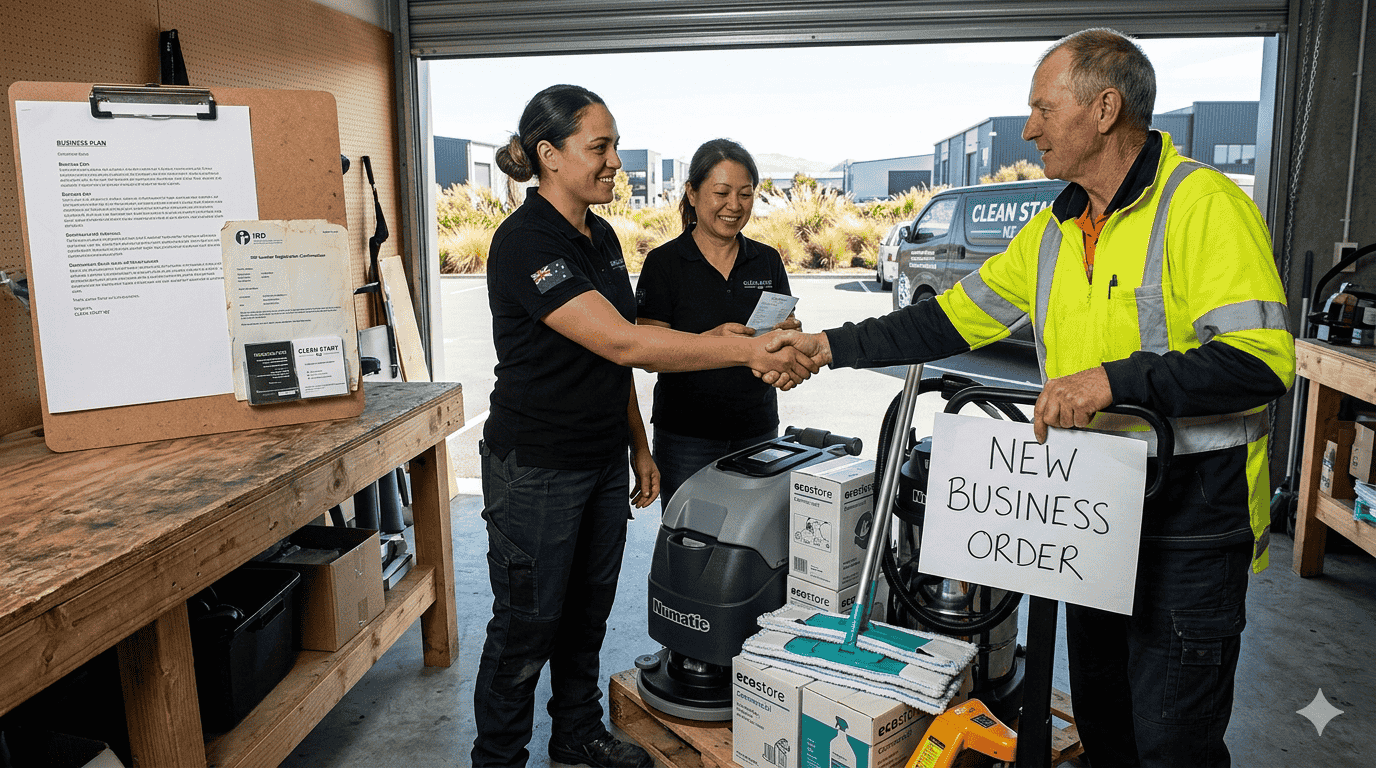
Starting a Cleaning Business in New Zealand, Step-by-Step Guide
For many NZ sole traders and first-time founders, starting a cleaning business in New Zealand makes sense because the barrier to entry is low, demand is steady, and you can begin with a small kit and one client at a time. In 2026, demand is rising across homes, offices, and end-of-tenancy cleaning, while many new operators can get started with modest setup costs and grow as bookings become regular.
This guide breaks it down in plain language, from choosing a niche and setting up as a Sole Trader or Limited Liability Company, to sorting your NZBN, IRD Number, and GST Registration ($60k threshold). It also covers the practical side, including the Health and Safety at Work Act 2015, ACC Levies, Public Liability Insurance, MoJ background checks, Service Agreements, PPE (Personal Protective Equipment), eco-friendly supplies, and how to win clients through a Google Business Profile, Tradies’ platforms, and local SEO.
Choose the right cleaning niche before you spend money
Before you buy a van full of gear, pick the kind of work you want to win first. In starting a cleaning business in New Zealand, your niche shapes almost everything, your setup costs, your hours, your pricing, and the paperwork you’ll need on day one.
Think of it like choosing a road before you fuel the car. A solo Sole Trader doing home cleans needs a very different setup from a team chasing office contracts. Some niches let you start light and test demand fast. Others can pay more, but they ask for tighter systems, stronger compliance, and more cash up front.
Residential cleaning suits lean start-ups and flexible schedules
For many first-time owners, residential cleaning is the easiest place to begin. You can start with regular house cleans, deep cleans, and end-of-tenancy cleaning, then build from there as your name spreads through local suburbs.
The appeal is simple. Most home clients care about trust, reliability, and a clean finish, not a big company image. That means a solo operator with solid Service Agreements, basic PPE (Personal Protective Equipment), and good communication can start small and look professional from the start. You’ll still need the right business basics, such as an NZBN (NZ Business Number) and IRD Number, and you may later need GST Registration ($60k threshold) once revenue grows.
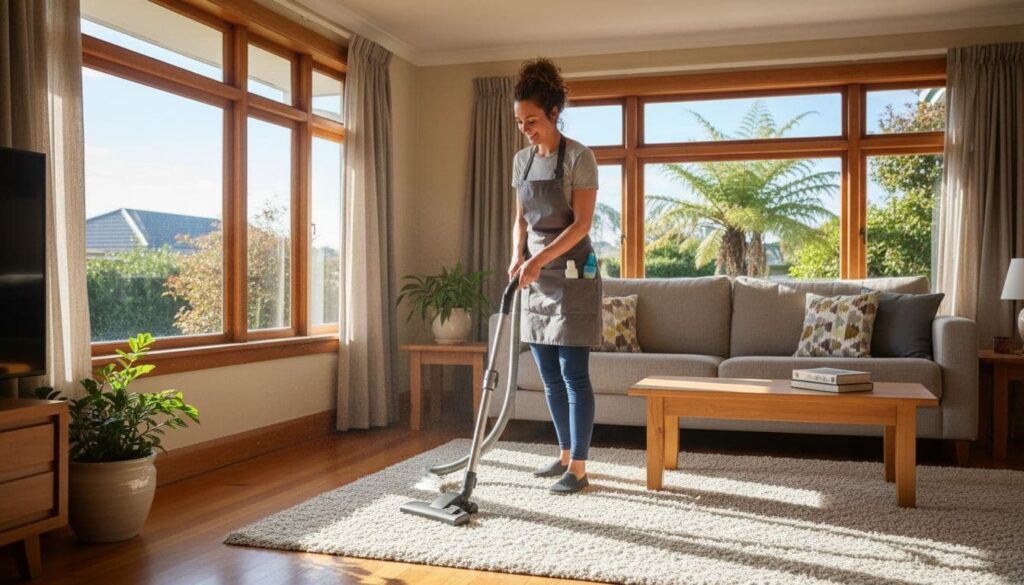
This niche also works well if you want control over your week. You can stack school-hour jobs, offer weekly or fortnightly cleans, and add one-off deep cleans during busy seasons. In many areas, word-of-mouth still moves fast. One happy client in a quiet suburb can lead to three more.
Still, there’s a trade-off. Residential jobs are often smaller, so you may spend more time driving between homes. Some clients also expect lower prices, even when the work is detailed and physical. That can squeeze margins if you underquote.
A simple rule helps here: keep your offer narrow at first. For example, begin with:
- Regular house cleaning, for repeat income and easier scheduling
- Deep cleaning, for higher-value one-off work
- End-of-tenancy cleaning, for landlords, tenants, and property managers
If you want a practical look at how NZ operators package home and mixed-property services,The Tidy Kiwi’s property care examples show how broad cleaning offers can be grouped without confusing the customer.
Commercial cleaning can bring repeat contracts and bigger invoices
Commercial cleaning usually means steadier revenue and larger invoices. Offices, retail stores, schools, and medical sites often need repeat service, which can turn a single win into a long-term contract.
That’s the upside. The harder part is that commercial clients usually expect more structure from the start. They may want after-hours work, lock-up procedures, reporting, clear scopes, and proof that you take risk seriously. In other words, this is where casual turns formal very quickly.

For office and retail work, you’ll usually need stronger systems around quoting, staffing, and quality checks. For schools and medical settings, expectations rise again. Clients may ask about your cleaning products, infection-control routines, staff vetting, and site access rules. That’s where Public Liability Insurance, ACC Levies, and solid health procedures stop being nice extras and start becoming part of the sale.
Commercial work also puts more weight on compliance. Your business should follow the Health and Safety at Work Act 2015, and many clients will want to see that you understand hazards, training, incident reporting, and safe chemical use. Some may also prefer or require Ministry of Justice (MoJ) background checks for staff, especially when cleaners work around children, records, or sensitive spaces.
Post-pandemic hygiene habits still support demand in this part of the market. Businesses remain more alert to high-touch cleaning, washroom standards, and visible hygiene routines. Recent NZ market reporting also points to ongoing growth in commercial and specialty cleaning demand, especially where hygiene and outsourced facility care matter most, as covered in Xero’s NZ cleaning business guide.
Commercial cleaning can look like the bigger prize, but it rewards systems first and hustle second.
If you choose this path early, think beyond supplies. You may need a formal Service Agreement, safer after-hours processes, and possibly a Limited Liability Company if you plan to hire and grow faster.
Specialty services can help you stand out in a crowded market
If general cleaning feels crowded, a specialty niche can help you get noticed faster. Services like carpet cleaning, window cleaning, eco-friendly cleaning, and move-out cleans give customers a clear reason to remember you.
That clarity matters. A broad promise like “we clean anything” often fades into the background. A narrow offer, by contrast, sticks in the mind. People remember the carpet stain expert, the move-out clean team, or the cleaner who uses eco-friendly/biodegradable supplies for allergy-sensitive homes.

A focused niche can also support higher pricing because clients compare fewer providers on a like-for-like basis. That said, specialty work only pays off when you have the right tools and know-how. Carpet cleaning needs machines, stain knowledge, and drying awareness. Window cleaning needs safe ladder work and technique. Eco-focused cleaning sounds simple, but customers expect products that work well, not just green labels.
Here’s the real test before you spend money: can you deliver the result consistently? If not, the niche becomes a trap instead of an edge.
A specialty offer works best when it checks three boxes:
- Clear demand in your local area
- Higher perceived value than standard cleaning
- Skills and equipment you can use with confidence
Move-out and end-of-tenancy work is a good example. It’s often urgent, detailed, and tied to real deadlines, so clients are willing to pay for reliability. Exterior add-ons can work too. If you’re considering branching into washing paths, driveways, or building exteriors, a pressure washing estimate calculator can help you gauge pricing before you buy more equipment.
Specialty niches also pair well with marketing. A tight service is easier to promote through a Google Business Profile, Tradies’ platforms, and local suburb pages built for Local SEO. When your offer is clear, your message lands faster, and that makes every dollar you spend work harder.
Set up your business the right way from day one
In starting a cleaning business in New Zealand, the early setup choices matter more than most new owners think. A good mop can clean a floor, but it can’t fix the wrong business structure, weak paperwork, or a messy registration trail.
This part is about building solid footing. Get the basics right now, and it’s much easier to sort your IRD Number, GST Registration ($60k threshold), ACC Levies, Public Liability Insurance, and daily admin without stress later.
Pick a business structure that fits your risk and growth plans
For most new cleaning businesses, the choice comes down to Sole Trader or Limited Liability Company. Partnerships exist, but they are less common for first-time cleaners unless two people are starting together and sharing profit, risk, and responsibility. In practice, most solo founders pick one of the first two.
Here is the simple side-by-side view:
| Structure | Startup cost | Admin load | Tax basics | Personal asset protection | Best fit |
| Sole Trader | Usually very low | Light | Profit is taxed through your personal return | None | Solo start, low cost, testing the market |
| Limited Liability Company | Usually $150+ to register a company | Higher | Company pays 28% tax, then you pay personal tax on salary or dividends | Stronger protection | Hiring staff, growing fast, larger contracts |
A Sole Trader is the fastest way to start. You can trade under your own name or a business name, use your personal IRD Number in many cases, keep records of income and expenses, and file tax through your personal return. That makes it a good fit if you’re doing home cleans, end-of-tenancy cleaning, or a few weekly clients while you build demand. If you’re new, this route often feels like a bicycle, light, quick, and easy to steer.
A Limited Liability Company takes more setup and more admin. You must register the company, keep company records, file annual returns, and treat the business as a separate legal entity. In return, you get better personal asset protection. If the company runs into debt or a claim, your personal assets are usually better shielded than they would be as a sole trader. That’s a big deal if you plan to hire, take on bigger commercial sites, or sign contracts where one mistake could become expensive.
Tax also shifts with scale. A sole trader pays tax at personal income tax rates on profit. A company pays company tax at 28%, and you then deal with personal tax on what you take out. That doesn’t automatically make a company “better” for tax. It just means the structure suits different stages of growth.
If you’re still weighing it up,Business.govt.nz’s sole trader toolkit is a practical place to start, and Business.govt.nz’s guide to starting a company shows what’s involved on the company side.
If you’re starting small and staying simple, sole trader often works. If you’re protecting against bigger risk and planning to grow, a company usually earns its keep.
Whichever path you choose, keep your business money separate from day one. Even a basic separate bank account can save hours of pain at tax time.
Register your business name, get an NZBN, and use the right government sites
Once you’ve chosen your structure, the next step is making the business real on paper. This is where many new owners lose time by bouncing between random websites. Stick with the official ones.
Use Business.govt.nz for setup guidance. It gives clear steps for getting started, registering with agencies, and understanding what applies to your type of business. A good starting point is registering with government agencies, which explains key registrations in one place.
Your NZBN (NZ Business Number) is a core part of that setup. Think of it as your business ID. It helps when dealing with government, suppliers, and customers, and it makes your operation look more established from the start. If you’re serious about starting a cleaning business in New Zealand, an NZBN is one of the easiest wins.
If you’re creating a Limited Liability Company, use the Companies Office process through the government pathway for company registration and name checks. Before you print flyers or order uniforms, make sure the name is available and not likely to cause problems. A business name that sounds great in your head can hit a wall if someone else already has it.
A few points keep this simple:
- Business.govt.nz is best for guidance and setup steps.
- Companies Office is where company registration and company name checks happen.
- NZBN is your key business identifier.
- IRD Number and tax setup follow close behind.
- GST Registration ($60k threshold) matters once turnover reaches $60,000 in 12 months.
For most cleaning businesses, there is no special cleaning license required in New Zealand. That’s good news, because it keeps the barrier to entry lower. Still, “no license” does not mean “no rules.” You still need to handle the basics properly, such as tax, safe work practices, and client trust. If you hire staff, the admin grows again because PAYE, leave, and employer duties come into play.
As your business grows, your setup also needs to support compliance. That includes the Health and Safety at Work Act 2015, ACC Levies, and often Public Liability Insurance. Those aren’t flashy, but they are the nuts and bolts that keep a cleaning business standing when things get busy.
Protect trust with simple paperwork and checks
Cleaning is a trust business. You’re often in someone’s home, office, or private work space when they aren’t there. That means your paperwork does more than look professional, it calms nerves and prevents arguments.
Start with four basic documents: quotes, Service Agreements, invoices, and short terms and conditions. You don’t need a thick legal pack. You need clean, plain words that explain what you will do, what you won’t do, what it costs, and what happens if plans change.
Your paperwork should cover the basics clearly:
- Scope of work: List the rooms, tasks, and exclusions. If oven cleaning or window cleaning costs extra, say so.
- Cancellations and access: State notice periods, lockout fees, and what happens if no one is home.
- Damage and complaints: Explain how issues must be reported and how you handle claims.
- Payment terms: Set due dates, late fees if any, and accepted payment methods.
A quote gets the job in the door, but a Service Agreement keeps everyone on the same page. It turns “I thought that was included” into “here’s what we agreed.” For recurring work, that matters even more.
Invoices matter too. Send them promptly, include your business details and NZBN, and keep records from the start. Clean admin builds confidence. It also makes tax, GST, and cash flow easier to manage.
Some clients will also ask for extra trust signals. In homes, schools, childcare settings, and offices with sensitive access, Ministry of Justice (MoJ) background checks can come up. These checks are not mandatory for every cleaning business, but they are common when clients want proof that the person entering the site has been screened. The official Ministry of Justice pages explain criminal record checks and how to get your own criminal record.
Trust is also built through the way you work. Show up with tidy systems, clear communication, and the right gear. That includes PPE (Personal Protective Equipment) where needed, sensible handling of chemicals, and, if it suits your market, Eco-friendly/Biodegradable supplies. Those details can help win jobs, especially when clients compare you with a cleaner who seems less prepared.
Later on, these same habits support your marketing. A cleaner with clear paperwork, solid reviews, and a professional process is easier to sell through a Google Business Profile, Tradies’ platforms, and Local SEO. In other words, trust doesn’t start when someone leaves a five-star review. It starts long before that, with the quiet paperwork that keeps the business tight.